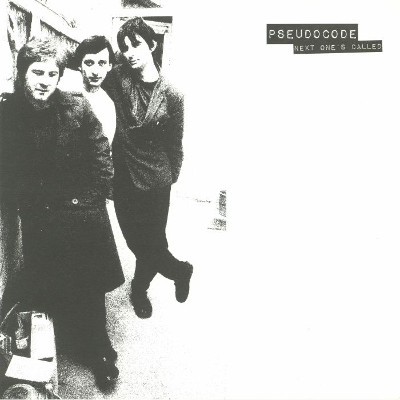
PSEUDOCODE Next One's Is Called
Description
Belgian electronic improvised music band, active from 1980 to 1982. featuring Xavier Ess (Thrills) / Guy-Marc Hinant / Alain Neffe (Insane Music, Bene Geserit)
Pseudocode in a kind of free form minimal electronique
concrete mood.There`s even the odd suggestion of a pop tune
here and there, maybe even some danceable beats; if you`ve
got one leg shorter than the other.
While Xavier S. contributes most of the lyrics and vocals,
Guy-Marc Hinant plays often the core melody on guitar or
electric piano, Neffe's contributions are particularly noteworthy throughout, as he weaves together the bulk of the sonic cloth through
overdubbing and mixing.one of his parts are remotely virtuosic
(hence his self-identification as a non-musician), but they are
always unexpected and perfect in and of themselves, emotionally
and sonically, and in that sense they are deeply musical.
Titles
01. A.D. (long version) 5'53
02. LAMENT 10'05
03. WAR DANCE AND INCANTATION 3'20
04. NEXT ONE'S CALLED 5'15
05. THEY TOLD ME 11'20
06. FASCINATION (repaired version) 4'20
Press
Vital Weekly (EN · FDW · 06/11/2018)
This bunch didn't arrive on the same day, so in the past weeks I have been hearing these in various
combinations. I was thinking where to start the review and decided to start with the closest outsider
of the Insane Music family and that is M.A.L. Daniel Malempre, as his real name is, is one of the
main musical collaborators of Alain Neffe, the man behind Insane Music, once a cassette label and
a family of bands and projects, most of which are subject of this review. Malempre was the guitarist
of Kosmose, more about that later, of Human Flesh and Subject. Very early on, somewhere in the
mid 80s probably, I already heard the story of a demo he send in the mid 70s of his solo guitar and
reel-to-reel compositions, which concept was 'stolen' by Manuel Göttsching on his 'Inventions For
Electric Guitar' and since then I was always curious to hear M.A.L.'s own music. There has not been
a lot of that, but EE Tapes released 'Eighties' (see Vital Weekly 585) which included pieces he
recorded in those years, but this new CD contains his 1972 to 1976 recordings. The cover tells you
the technical side of the story, about one guitar and a four-track recorder, bouncing of tracks and
recording at higher/slower speeds. And of course I too went to the Göttsching 1975 record (look for
it on YouTube) to compare both albums. It is not difficult to hear that both tap out of the same book
of ideas; guitars, lots of delays and both are cosmic trip. I am not the sort of guy that can rightfully
say if Göttsching stole the idea for this from Malempre, or simply was simultaneously developing
his own brand of working with reel-to-reel recorders. As did Brian Eno and Robert Fripp at the same
time; all building on working with reel-to-reel machines like musique concrete composers did since
the fifties. M.A.L. has sixteen pieces here and range from a minute miniature to over fifteen minutes.
There is indeed a lot of music on this release, seventy-seven minutes and not all tracks are equally
great, but you get a very good idea of how M.A.L. worked. It works best if he keeps his drones and
loops together, spice with some bass notes and a small, repeating melody or phrase, as in
'Cassiopee' or 'Betelgeuse'. Sometimes a song is merely an idea and that's it, but then it doesn't
work that well, especially when it is a long piece, such as in 'Thor'. I am not deciding the fight over
originality here. I enjoyed hearing these pieces after all the rumour for all these years and all
Göttsching fans should hear this too and make up their own minds.
Malempre was together with Alain Neffe part of Kosmose in the seventies and up until a few
years ago I never knew that Neffe did any music before 1979/1980 when he surfaced with Pseudo
Code. Back then, when I first heard his music, I knew that I Scream was a solo project with some
older recordings, but I didn't think he would be part of a band. Sub Rosa released a double CD by
them some years ago and that was the first time I heard about it. That one wasn't reviewed, but EE
Tapes did one as well (see Vital Weekly 1111) and the archives of Kosmose are delved into further
with this double release (and I happen to know there is more in case someone is interested). Here
Kosmose is Neffe on monophonic synthesizer, flute, primitive rhythm box, cymbal, bell, clumpsy
voice, tarang, Malempre on electric guitar, 112 string acoustic guitar and Francis Pourcel on bass,
bass with violin bow, electric guitar. Kosmose went through various stages with differing line-ups
and this is the first version and contains a recording of their only concert. The absence of a
drummer makes them even more spacier, more kosmische than on the previous recordings I heard
from them. Malempre's guitar sounds at times like it does sound like the work on his solo CD. I quite
enjoyed those previous releases, but they reach for a sound here that I like even more. It is hippie
trippy music of course, vast and spacious, free and wild, but it is very much away from the beat
driven krautrock that was also part of the scene and of which Kosmose also had a bit. But these live
recordings, recorded with two microphones and reel-to-reel deck ("recorded by Alain while playing"
says the cover; bravo!), makes that this is also a bit of rough diamond and it exactly that roughness
that I like very much. There is nothing polished about this music and we are witnessing an all out
space jam. Close your eyes and float away; play loud and you could believe you are right there
and then, present in the audience. No incense required but it could help (I wouldn't know; I dislike
incense). One hundred minutes of pure bliss,
The '4 in 1' series are a sort of progress report/archive of Insane Music bands, but also allowes
outsiders into the family. The first one is a legendary cassette from the early 80s, followed by a LP a
little later. Volume 3 (CD; see Vital Weekly 846) and 4 (cassette; see Vital Weekly 1043) are more
recent and now there is a volume 5, again on LP, with three Alain Neffe projects and M.A.L. is also
present. There is a CD version included with bonus tracks for all four projects, one for each. The
archival function is for the pieces by I Scream (1975) and Human Flesh ("late 80s-early 90s")
whereas from Bene Gesserit and M.A.L. the pieces were recorded in recent years. Those two
projects are on the first side, with four Bene Gesserit pieces that display their Dadaist version of
electronic music in a very fine way. The voices are fed through a vocoder in 'Ceci N'est Pas Une
Chanson...', or with Benedict G singing mysteriously in 'Les Fourmis', or the all out fun (?) of 'Half
Hyserical Mid Tempo Sort Of Rock', being a very classic and funny Bene Gesserit piece. M.A.L.
has expanded his old style with drum machines and synthesizers and his music has a fuller flavour
now. A bit orchestral in 'Trinity Will Kill Again', Middle Eastern inspired in 'Turkish Morning' or raga
in 'Indian Song', all of which come with M.A.L.'s trademark guitar loops. Human Flesh here is in full
collaborative modus here, with people supplying sounds on tape and Neffe adding his music and
sounds to it. Some of these pieces are with M.A.L. or Xavier S of Pseudo Code but also words
supplied by Lena Torgrimsen. Human Flesh is always a bit moody and atmospheric, with string
like drones and loops of saxophones, flutes and guitars and with these pieces reach for a more
poetic approach, not unlike Cortex, even if that was more minimal. I Scream remain one of the
more obscure Neffe projects, his earliest solo music from the mid 70s. Here he experiments with
old synthesizers and reel to reel machines, rhythm machines and "Elka strings" and the music is
the most experimental of the whole record, with weird synthesizer sounds, especially on the CD
bonus track '(Maybe) I'm Slowly Going Insane', but also cosmic in 'Saved By The Synth'. Hearing
this I think it should be about time there is a double CD with all of these early I Scream pieces.
Excellent compilation and with only four bands one has a clearer idea of what they are about
should you be a novice to this music.
And then Pseudo Code. I can't reveal my personal hierarchy in liking bands from Insane
Music, but I can tell you that Pseudo Code is my favourite band. It is, perhaps, also the first I really
heard and read about; no doubt in a fanzine called 'BoH' and a Dutch music magazine 'Vinyl'.
Early on I picked up their second 7" 'Moon Effect' and it was a band that stood out on compilation
cassettes, very much like The Legendary Pink Dots, but differently. I guess the voice of Xavier S
plays an important role here, as it is very much a recognizable voice of what seems at times a very
troubled singer. A voice of pain and anger maybe. Alain Neffe plays synthesizers, rhythm machine,
strings organ and saxophone while Guy Marc Hinant plays pianet (also a very uncommon
instrument in the world of 'industrial' music, and yes, I know they hated that word), percussion, or
guitar. The rhythm machine keeps the music together, while everybody, singer included, more or
less freely moves around that. Sometimes this may result in a proper song, certainly when Neffe
plays a melody (or Hinant on guitar in the title piece), but it can also be a rather free form music
piece of loosely connected sounds, such as the beautiful 'Lament', which seems to be more the
result of improvisation, but around some guidelines. All of the pieces, save one, which now appears
in a longer form, were previously unreleased. I have no idea how deep the Pseudo Code vaults are
as we have seen quite a bit of recent archival releases. I am very happy with all this new/old music,
as it expands the already rich history here with some further releases and none of these recent
releases show any sign of weaker songs. There is most certainly not a scraping the barrel idea
here. Is there more? Give it to us! Is this it? What a heritage!
Musiczine (FR · François Becquart · 17/08/2018)
Pour appréhender cet album de Pseudocode, il faut faire un bond de quarante ans en arrière, à l'époque de la vague punk finissante en Belgique. En 1978-79, un petit groupe du nom de Thrills connaît une brève carrière au service du punk. Ce combo composé de Xavier Stenmans (chant, dit Xavier S), Stephan Barbery (guitare), Alain Lefebvre (batterie) et Luc de Meersman (basse) a à peine le temps d'enregistrer quelques titres inédits qu'il est déjà mort et enterré. On ne retrouvera sa trace que sur la mythologique cassette compilatrice "How to catch a passing comet?", attribuée à Stephan Barbery en 1982.
Entretemps, Xavier S a fondé le combo Pseudocode avec Alain Neffe et Guy-Marc Hinant. Ce groupe se situe dans le post-punk, avec une botte lourdement engluée dans l'électro-indus, appelé à l'époque cold wave. On est en 1980 et la Belgique connaît, comme bien d'autres pays européens, une floraison post-punk électro dont les fleurons principaux sont TC Matic, Allez Allez, Bernthøler, Polyphonic Size, sans oublier les référentiels The Neon Judgement. Pseudocode occupe les couches basses du mouvement et se démarque par son approche résolument expérimentale de la question post-punk. Le groupe commet trois albums, ou plutôt deux cassettes ("Potlatch music, vol.1", 1980; "Potlatch music, vol.2", 1981) et un album ("Europa", 1982) avant de disparaître.
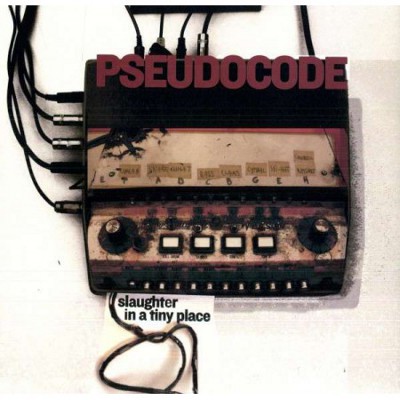
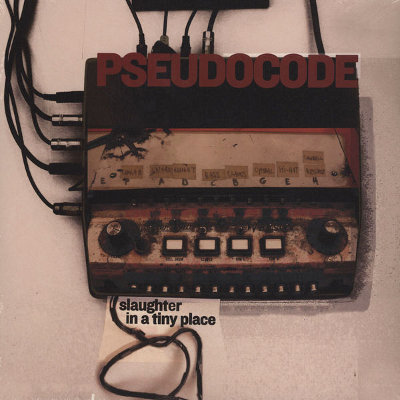
Après l'expérience Pseudocode, la plupart des anciens du combo se lancent dans la création de labels. Ce sera Insane pour Alain Neffe et Sub Rosa pour Guy-Marc Hinant. Ces deux labels vont s'empresser de commercialiser des chansons inédites de Pseudocode au travers des albums "Remains to be heard", volumes 1 et 2, parus chez Insane en 1984 et 1986, puis de "Slaughter in a tiny place", publié chez Sub Rosa en 2010. Sub Rosa joue à nouveau les spéléologues du rock en extrayant des couloirs du temps ce "Next one's called", composé d'autres titres inédits enregistrés entre 1980 et 1981. On y trouve des morceaux bruts de décoffrage, donnant tantôt dans le planant stratosphérique ("A.D.", "Lament"), tantôt dans le rugueux (un "Next one's called" à rapprocher des Bérurier Noir ou de Warum Joe). "They told me" reste la pièce de résistance de l'ensemble, avec plus de onze minutes de collages électroniques capable de bien irriter son monde.
Sub Rosa édite ici un disque révélateur. On découvre en effet un des secrets les mieux gardés de la cold wave belge des années 80. Dissonant, décalé, névrotique, aventureux, Pseudocode avait en mains toutes les cartes pour être complètement incompris à l'époque. Il s'est merveilleusement bien acquitté de cette tâche mais ce n'est pas une raison pour continuer à ignorer ce groupe éminemment intéressant.
From the same artist
Best selling

Best shots
 MOTHER TONGUES/t20.70 €
 COILHow to Destroy Angels19.60 €
 IT DOCKUMER LOKAELTSJELoop of Sloop26.80 €
 NIBLOCK, PHILLBLK+LND / K&L for KL19.60 €